- Articles on Barney Oldfield
- Barney Oldfield Scrapbook Overview
- Oldfield 1906
- Oldfield Suicide Attempt
- Barney Oldfield and Lincoln Beachey
- Barney Oldfield Autobiography - Saturday Evening Post
- Barney Oldfield's 1910 Land Speed Record
- The Vanderbilt Cup
- Oldfield's Late Career
- Barney Oldfield and the Indy 500
- Oldfield - Petersen Collection
- Various Oldfield Races & Items
- Tom Cooper
- Articles on Early Track Racing
- Sigur Whitaker Articles
- Atlanta Speedway
- Miscellaneous Track Races
- 1906 Benefit Race
- Oval Vs. Road Racing
- 24 Hours of Indianapolis
- 24 Hours of Brighton Beach
- AAA Articles
- Driver Profiles
- Ken Parrotte Research
- William Borque
- Yesteryear at the Uniontown Speedway
- Joan Cuneo by Elsa Nystrom
- Automobile Advertising
- Louis Chevrolet
- The First Mile-A-Minute Track Lap
- Non-Championship Oval Track Races - 1905
- The Lost Championship of 1905
- 1908 Track Racing
- Astor Cup - 1916
- Playa Del Rey Board Track
- 40's - 60's Feature Articles
- Early Indianapolis Motor Speedway
- IMS Construction
- Brickyard Personalities
- Good Roads Movement
- Early Indianapolis Auto Industry
- Joe Dawson
- Carl Graham Fisher
- Fisher Automobile Company Ads
- Allison, Newby and Wheeler
- Prest-O-Lite
- Ernie Moross
- 1909 Balloon Race
- Indianapolis Motorcycle Races - 1909
- First Auto Races at the Indianapolis Motor Speedway - August 1909
- Failed 1909 Air Show
- Becoming the Brickyard
- December 1909 Time Trials
- IMS Planning - 1910
- March 1910 Indianapolis Auto Show
- Indianapolis Motor Speedway May 1910
- Indianapolis Motor Speedway Summer 1910
- Indianapolis Motor Speedway Aviation Show - June 1910
- July 1910 Race Meet
- Indianapolis Race Teams - Summer 1910
- September 1910 Race Meet
- Indianapolis Balloon Races - 1910
- First Indianapolis 500 - 1911
- 1913 Indianapolis 500
- Packard Speed Record
- Brooklands
- Dario Resta
- Indianapolis Harvest Classic
- Wheeler-Schebler Trophy
- Early Road Racing
- American Grand Prize
- Savannah
- Glidden Tour
- Pioneers
- Hill Climb Races
- Fairmount Park
- Coppa Florio
- Daytona - Ormond Speed Trials
- Beach Racing
- Horseless Age 1905
- James Gordon Bennett Cup
- Vanderbilt Cup
- Lowell Road Race
- The French Grand Prix
- 1908 - New York to Paris
- Cuban Road Race
- Cobe Trophy
- Obscure Early American Road Races
- The Cactus Derby
- Briarcliff, NY Road Race
- Isle of Man
- David Bruce-Brown Obituary
- A Woman's Ride In A Racing Car
- Mark Dill's Articles
Harry Stutz
Article Categories
Relevant Content
- Indianapolis' Great Flood of 1913
- IIlmor Engineering
- "Umbrella" Mike
- Frank Lockhart
- Penske Buys Michigan International
- The Rookie Test
- Stark & Wetzel Trophy
- Carl Fisher and the Omni Severin Hotel
- Racing Politics 1916
- The Zig-Zag Club
- Carl Fisher and His Power Boat
- Allison's Speedway Team
- Mormon Meteor
- Fred Duesenberg
- Fred Duesenberg
- Little-Known Duesy Story
- Little-Known Duesy Story
- Roger Penske Sports Car Driver of the Year
- Rickenbacker By Whitaiker
- Tire Wars in the 1960s
- 1910 Aviation Week
- Balloon Tires at the Speedway
- 1960s Tire Wars
- Howard Keck
- First Indy 500 Pace Car
- Jules Goux And The 1913 Indianapolis 500
- When The Indy 500 Became Truly International
- Speedway Founders, Turkey Run State Park
- Arthur C. Newby
- Frank Wheeler
- Sigur Whitaker Book Review, "The Indianapolis Motor Speedway 1928-1945, The Eddie Rickenbacker Era" by Denny Miller
- The Great Miami Hurricane of 1926
- Erwin "Cannon Ball" Baker
- Louis Schwitzer
- Empire Motor Car Company
- The Belond Special
- Indy 500 Pace Car Drivers
- Auburn Museums
- Pace Car Crash!
- ASPAR
- The Blue Crowns
- The First "500" Woman Driver
- More Sauerkraut
- You Ruined my Sauerkraut!
- "The British at Indianapolis" Book Review
- The Twin Cities Motor Speedway
- The Miami 12 Engine
- Thunder At Sunrise - Book Review
- Eddie Rickenbacker Paves the Speedway
- Montauk
- Rickenbacker's Pace Car
- Rickenbacker Buys IMS
- Cocolobo Cay Club
- Whitaker on Race Against Time and Death
- The Brickyard Crossing
- The Winningest Driver
- Ferrari
- Carl Fiisher Car Promotions
- Carl Fisher and His Elephants
- Carl Fisher, Master Promoter
- Sigur Whitaker Reviews "Master Driver of the World"
- Bessie Lee Paoli
- 1955 - Year of Tragedy
- Umbrella Mike
- Lucy O'Reilly Schell
- A Jeopardy - Type Question (Paula Murphy)
- The Astor Cup Story
- The Great Zoline Caper
- Sigur Whitaker on Prest-O-Lite
- IMS Radio History
- IMS Pagoda History
- Sigur Whitaker on the Golden Submarine
- The Fulford-Miami Speedway
- Book Review--Barney Oldfield, The Life and Times of America's Legendary Speed King by William F. Nolan
- Cummins, Part 2
- Cummins Special
- The Great Zoline Caper
- Book Review: Mark Donohue, Technical Excellence at Speed
- Why a balloon is painted on the side of a restroom at the Indianapolis Motor Speedway
- Indy Autonomous Challenge
- Book Review: Victory Road: The Ride of My Life by Helio Castroneves
- Polo at the Indianapolis Motor Speedway
- Tradition of the Indianapolis 500 winner drinking milk
- Kissing the Bricks Tradition
- Maude Yagle--Ahead of Her Time
- Speedway, Indiana
- Book Review: The Legend of the First Super Speedway
- The Great Speedway Heist (Almost)
- He Drives A Duesenberg
- The Miami Aquarium Inbox
- Hitting on all cylinders Inbox
- I've Got Your Back
- Book Review: Beast, by Jade Gurss
- The Year Team Penske Did Not Make the Indianapolis 500
- The Long Downward Spiral
- Book Review: Rick Mears Thanks. The Story of Rick Mears and the Mears Gang by Gordon Kirby
- Orville Redenbacher and Tony Hulman
- 1941 fire in Gasoline Alley
- The Newby Oval
- Tony Hulman and the formation of USAC
Search
Featured Article
Image of The Week
By Sigur Whitaker
(Part 1)
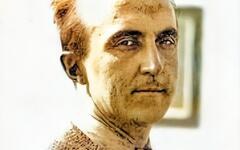
Harry Stutz was born in Ansonia, Ohio, in 1876. At a young age, he showed great ability
to repair things, so much so, that people in his small town would say, “That Stutz lad
can fix anything.” A tinkerer, he built his first car, Old Hickory, in 1898 from abandoned
agricultural parts. 1
Like many young men of his generation, Stutz decided that living on a farm was not for
him and migrated to Dayton, Ohio, where he found work as a mechanic. 2 In 1903, he
moved to Indianapolis wanting to be part of the nascent auto industry. Initially, he found
work at G& J Tire Company, and within a year at Schebler Carburetor Company. 3
He finally got his chance to design automobiles when, in 1906, he was hired by the
American Motor Car Company as its chief engineer. 4 A four-cylinder American touring
car with 35 to 40 horsepower was displayed at the 1909 New York Auto Show. 5
In 1907, Stutz became the chief engineer at Marion Motor Car Company in
Indianapolis. 6 Under Stutz’s direction, two cars, driven by Alfred Monson and Charles
Stutz. were entered in the Coby Trophy Race in Crown Point, Indiana. 7 This was
unusual as Marion did not normally participate in races, but it was an opportunity for
Stutz to test some of his theories. It was a different outcome over the Fourth of July
races at Wildwood, New Jersey. Charles Stutz won two races and finished second and
third. 8
Carl Fisher, James Allison, Arthur Newby, and Robert Hassler, founders of the Empire
Motor Car Company, hired him to develop a new low-price automobile. “The Little
Aristocrat”, a four-cylinder automobile, was introduced in July1909. 9 The Little Aristocrat
participated in the reopening of the Indianapolis Motor Speedway on a bitterly cold day
in December. 10
1 Rothermel, Bill, “The Stutz Motor Car Company—“The Car that Made Good in a Day,”
https://www.classiccarclub.org/info-garage/stutz.
2 Caitlin, Russ, “The Harry Stutz Era,” Automobile Quarterly, Winter 1970, Vol. 8, No 3, p 230.
3 Rothermel, Bill, “The Stutz Motor Car Company—“The Car that Made Good in a Day,”
https://www.classiccarclub.org/info-garage/stutz.
4 Horvath, Dennis, “The Americn Underslung—The Safest Car on Earth,” January 28, 2013,
https://historicindianapolis.com/the-american-underslung-the-safest-car-on-earth/
5 The American Touring Car,” Horseless Age, January 24, 1906, Vol. 17, No. 4, p 182.
6 “Fine Coby Race Stretch,” Indianapolis Star, May 30, 1909, 41.
7 “Stutz Enters Marions,” Indianapolis Star, May 15, 1909, 8.
8 “Premiers Depart Today For Detroit,” Indianapolis Star, July 6, 1909, 11.
9 “Empire Name Of New Indianapolis Auto, Indianapolis News, July 5, 1909, 12.
10 Kimes, Beverly Rae, “The Rise and Fall of the Empire,” Automobile Quarterly, Vol XII, No. 1, 68.
Around 1910, Stutz designed a transaxle, a device which combined the transmission,
axle, and differential into one device. To market the device, Stutz, his cousin Charles
Stutz, and Henry Campbell incorporated the Stutz Auto Parts Company in Indianapolis
with $10,000. 11 Stutz resigned from Marion in 1910 12 after winning two races for Marion
that year.
While Stutz had designed the initial “Little Aristocrat,” as a side job to his work at
Marion, he was hired by Fisher, Allison, and Newby to become the chief engineer and
manager for Empire in 1911. 13
Stutz began designing his own car in 1910 and entered it in the first Indianapolis 500 in
1911. Built in just five weeks, the car had a four-cylinder T-head Wisconsin engine and a
transmission with three forward speeds and one reverse. 14 This car was the first to run
some practice laps for the 1911 Indianapolis 500. 15 Out of a field of 40 entries, the Stutz
racer, driven by Gil Andersen, finished 11 th . Stutz used the tagline “The Car that Made
Good in a Day.” 16
Stutz talked about the development of this car. “This is the first Stutz car I ever built, but
I believe I will be justified in making more, since this one has shown up so well.” 17 Stutz,
with the financial backing of local and eastern financiers, organized the Ideal Motor Car
Company and announced the building of a car based upon the racer. The company
leased a three-story building at 10 th and Capitol Avenue from Carl Fisher. Auto
production began in August 18 and in September, they announced the first shipments of
the Stutz automobile. 19 Initially, three body styles were introduced: a two-seat roadster, a
four-seat toy Tonneau, and a five-seat touring car. 20
It didn’t take long for a Stutz car to be entered in an endurance run. Shortly after the
cars rolled off the assembly line, Harry Stutz announced the car’s participation in the
Fairmont Park road race in Philadelphia in October. 21 Driven by Gil Andersen, the car
finished second. 22
11 “Gossip of Wide Awake Motor Devotees, Indianapolis Star, January 9, 1910, 33.
12 “Harry C. Stutz,” Horseless Age, July 13, 1910, 65.
13 “H. C. Stutz,” Horseless Age, March 8, 1911, 472.
14 Caitlin, “The Harry Stutz Era,” Automobile Quarterly, Winter 1970, Vol. 8, No 3, p 231.
15 “Racers Start Tuning Up for Big Race,” Indianapolis Star, April 8, 1911, 11.
16 “Famous Drivers Face Real Test,” Indianapolis Star, May 26, 1912, 46.
17 “Stang Brings Case Team to Turn Motors for Big Race,” Indianapolis Star, May 10, 1911, 9.
18 “Stutz Will Build Racer Duplicates,” Indianapolis Star, June 11, 1911, 31.
19 “Will Market New Autos,” Indianapolis Star, September 3, 1911, 33.
20 “The Stutz Car—A Newcomer in High Powered Class,” Horseless Age, June 14, 1911, 1014.
21 “Local Pilot Will Drive in Fairmont,” Indianapolis Star, September 3, 1911, 31.
22 “Amateur Pilot Is Winner in Big Race,” Indianapolis Star, October 10, 1911, 8.
In February 1912, Stutz Motor Car Company introduced a two-seat sports car built
along the lines of the race car. Low to the ground with bucket seats, the Stutz Bearcat is
believed to be America’s first sports car. Designed to go fast, the car was equipped with
a Wisconsin engine with 389 cubic inches of power and a Stutz designed transaxle. The
car could go 90 miles per hour. 23 The car was introduced at the Chicago automobile
show. 24
Stutz entered three cars in the 1912 Indianapolis 500 piloted by Gil Andersen, Charlie
Merz, and Len Zengel. 25 Merz finished fourth nearly 13 minutes behind winner Joe
Dawson and Len Zengel finished sixth. 26 Gil Andersen, who started from the pole, was
involved in an accident on lap 80 and was awarded 16 th place. 27
In 1913, Stutz decided to change the company’s name from the Ideal Motor Car
Company to the Stutz Motor Car Company in order for the company to be recognized
as the builder of the Stutz automobile. 28 He also designed an electric self-starter with a
pedal on the floor. 29
The appeal of the Stutz cars spread beyond the United States. Eight were sent to
Portugal, ten to Australia, and one to Spain. Each of the automobiles had a special
wood crate for their voyage across the ocean. 30 With the success of his automobiles, the
space rented from Carl Fisher was not sufficient. Stutz bought property on Capitol
Avenue and Tenth Street and built a four-story building. 31
Happy Holidays! I hope you will enjoy being with friends and family. I will be
taking the next two weeks off.
It is your last chance to take advantage of my publisher, McFarland & Company’s
(www.mcfarlandpub.com), holiday sale. Until December 24, you can get 20% off of
their entire catalog with the code Holiday 25.
23 “1912 Stutz Bearcat” https://www.cobblebeachconcours.com/1912-stutz-bearcat1368c2adf
24 “”Bearcat” Is Latest Stutz Idea,” Indianapolis News, February 17, 1912, 9.
25 “Famous Drivers Face Real Test,” Indianapolis Star, May 26, 1912, 46.
26 A. S. Blakely, “Dawson Victor In Pilots’ Race For Rich Prize,” Indianapolis Star, May 31, 1912, 1.
27 Indianapolis Motor Speedway, “1912 Indianapolis 500 Race Results,”
https://www.indianapolismotorspeedway.com/events/indy500/history/historical-stats/race-stats/race-
results/1912
28 “Ideal Is Now Stutz Motor Co.,” Horseless Age, May 14, 1913, p 889.
29 “Electric Self Starter on Stutz Cars,” Horseless Age, July 16, 1913, 91.
30 “Europe And Australia Buy Stutz Car,” Indianapolis Star, December 15, 1915, 24.
31 Daniels, Bruce, “All Roads Lead To Indianapolis,” Indianapolis Star, May 24, 1914, 56.
Part 2
Harry Stutz designed the Stutz Bearcat based upon the car he entered in the 1911 Indianapolis 500. The car was very popular and by May 1914, demand outstripped supply. You couldn’t buy one. To expand production, Stutz built a four-story building doubling floor space.
Needing additional capital to support the growing business, Stutz sold controlling interest to a consortium headed by New York financier Allan Ryan in June 1916. Ryan pledged that the operations would not be changed. Harry Stutz remained as president of the new corporation, Stutz Motor Car Company of America. He was joined by Ryan as vice president, and George H. Saylor of Chase Bank as secretary/treasurer.
In August 1919, Stutz announced a significant expansion to its facilities to support a plan to double production from 3,000 cars annually to 6,000 cars. The additions included a one-story building at the corner of Tenth and Senate Avenue in Indianapolis and two four-story buildings, one on Capitol Avenue and the other on Senate Avenue. The additional facilities provided 450,000 square feet of production space at a cost of $800,000. To support this expansion, the company announced the sale of 25,000 shares of stock. The stock was offered at one new share for every three shares currently owned with a price of $100 per share.
With the announcement of the expansion of the business, Harry Stutz announced his retirement. He explained, “I believe there is a point in any factory’s expansion where the penalty for increased production may become decreased quality, and I will never build any more cars than I can build well.” Replacing Stutz as president was Allan Ryan, the New York financier. Stutz told the newspaper he planned to retire from business activities and pursue personal interests.
Within months after announcing his retirement from business, Stutz founded the H. C. S. Motor Corporation. The company was organized in Indianapolis with a capital base of $1 million and Stutz was the primary shareholder and president of the firm. He also founded the Stutz Fire Engine Company . The first H.C.S. cars were constructed inside the Stutz Fire Engine Company factory located at 14th St. and North Capitol Ave. The demand for the Stutz fire engine increased after one of its vehicles scored a perfect score in a 12-hour test, resulting in the need for the entire factory to be used to build fire engines. As a result, Stutz announced there would be a new four-story factory to produce H.C.S. automobiles located at the corner of 14th St. and Capitol Ave. The factory consisted of two buildings, each with a 60-foot frontage on Capitol Avenue and a depth of 200 feet, constructed of steel and concrete with a brick facade. The estimated cost for both buildings was $500,000.
In November, 1919, an H.C.S. automobile was shown in the east dining room of the Astoria hotel. What was amazing about the H.C.S. was that on September 22, 1919, the car existed only in blueprint form. Within two months, there were two models ready to be displayed at the auto show.
There was an economic downturn in 1920 which extended well into 1921. This economic slump was the precursor of difficult times in the industry. The high price of commodities from food to housing lessened the demand by consumers for automobiles. The short-term result was an oversupply of automobiles being produced. Despite this, Stutz introduced the H.C.S. roadster, “the car that was demanded.” It was priced at $2,925 while a five passenger model was priced at $2,975.
The Indianapolis Motor Speedway named the H. C. S. Roadster as the pace car for the 1921 Indianapolis 500 with Harry Stutz at the wheel. Stutz practiced with his car on the track for several days before the Indianapolis 500, obtaining a speed of roughly 60 miles per hour.
Stutz entered two H.C.S. cars in the 1923 Indianapolis 500. One had Tommy Milton at the wheel who held the pole position with a qualifying speed of 108.17 mph. The second H.C.S. car was on the 3rd row with Howdy Wilcox as the pilot. In front of a crowd estimated at 150,000, Milton won the Indianapolis 500 with an average speed of 90.95 mph, becoming the first driver to have two victories. Harry Stutz attributed the win to two chief factors: the teamwork of the mechanics and drivers for the H.C.S. team and the care given to preparing the cars for the race. The winning car had been rebuilt three times prior to the race. Stutz commented, “Absolutely nothing has been overlooked to make the machine as mechanically perfect as possible.”
With overcapacity in the automotive industry, H.C.S. reduced its pricing by $200 on its vehicles in 1921. Seeking an alternative use of their cars, in 1924 H.C.S. entered the production of taxi cabs. H.C.S. Cab Manufacturing Company was incorporated with capitalization of $1,000,000 by Harry Stutz, Henry Campbell, and others. The company planned to make and sell taxi cabs, motor cars and other automotive vehicles in the H.C.S. plant. By late August, the H.C.S. taxi cabs rolled off the production line. The cab was built on a 110-inch wheelbase but had a tight turning radius. The introduction of the taxi cab resulted in numerous orders for the company.
Despite the introduction of the taxicab, it didn’t make any difference. In 1926, Harry Stutz shuttered H.C.S., retired, and moved to Orlando, Florida, with his second wife. On December 27, 1926, H.C.S. Cab Manufacturing Company was put into receivership by the Central Manufacturing Company of Connersville, Indiana, which produced the bodies for the cabs. In the filing, Central Manufacturing Company stated that H.C.S. had debts in excess of $104,000. He was also being sued for alienation of affection by his second wife’s first husband.
While in Florida, he invented a small, four-cylinder aircraft engine. At the time of his death, he was working on arranging for its manufacturer.
Feeling ill, Stutz sought medical attention in Orlando where he was told he had intestinal influenza. In considerable pain, he drove to Indianapolis where a physician diagnosed appendicitis. He died from complications of surgery on June 26, 1930, at Methodist Hospital.
Part 4: Stutz Investors
Thomas Ryan, the father of Allan Ryan, opened a brokerage firm in 1893 and bought a seat on the New York Stock Exchange in 1894. Thomas Ryan accrued his wealth by consolidating the public transportation in New York City and consolidating the Metropolitan Traction Company from the street railroads in New York City. In 1898, he formed the Union Tobacco Company which joined with James Duke’s American Tobacco Company to form the British-American Tobacco Company. He also had financial interests in banking, life insurance, oil, typewriters, diamonds, rubber, coal, coke, lead, and electricity. Thomas Ryan was one of the wealthiest men in America. When he died, his estate was estimated at $142 million.
Thomas Ryan taught Allan the ins and outs of finance and in 1905, when Allan was 25 years old, his father gifted him his seat on the New York Stock Exchange. He formed Allan A. Ryan & Co. Ryan invested in a variety of companies ranging from candy to oil wells, and textiles. He became known for being very adept at squeezing short sellers. Short sellers believe that a stock is going to decline in price. The short sellers borrow shares and sell them for future delivery with the hope that the stock price will decline and that they can buy the stock at a lower price to repay their loans.
Allan Ryan bought control of Stutz Motor Car Corporation from Harry Stutz in 1916. Stutz remained president of the company with Ryan being named vice president. When Ryan planned an expansion of the firm in 1919, Harry Stutz resigned from the company he founded. Within a year, Ryan would short the Stutz stock he owned.
In January 1920, Ryan caught influenza on a trip to Indianapolis to inspect the Stutz factory which turned into pneumonia. In February 1920, he learned that the Stutz stock, which had been selling for around $100 per share, had increased to $123.50 per share at the close of business on March 8, 1920.
By March 31, 1920, Stutz stock experienced a meteoric rise to $391.00 per share. Ryan quickly concluded that speculators were buying the stock. Rumors around Wall Street were that a steel man went short on the stock by some 200 points and was being squeezed. Another rumor surrounding the stock was that the companies controlled by the Allan Ryan group were to be consolidated into one company. Turns out it was some of his fellow members of the New York Stock Exchange speculating in Stutz stock. It was a high stakes proposition. One side or the other would benefit and the other would lose.
Ryan was known as the bear of Wall Street, and he was more than capable of playing the game. He decided to buy all the Stutz stock being offered for sale. To do this, he borrowed heavily from individuals and banks. As the short sellers became more greedy, they sold their stock to Ryan. The ironic twist was that to sell the stock to Ryan, they had to borrow the shares from him. He controlled all of the stock and was aware of who was behind this scheme. When he was questioned by the Exchange’s Business Conduct Committee, he explained that he and his family owned all of the Stutz stock. He offered to sell it to them at $750 per share, which would mean they would lose between $350 and $650 per share The governors of the New York Stock exchange responded by suspending the trading of Stutz stock on March 31, 1920. This action was unprecedented in the history of the Stock Exchange, since it prohibited trading on the floor of the exchange as well as among members outside of the exchange
Several days later, the situation became clear when the New York Stock exchange officials ruled that the failure to deliver the shares of stock which had been sold short would not be considered a breach of contract. At the time, Allen Ryan and his associates controlled approximately 80% of the 100,000 shares outstanding. The stock had been loaned and re-loaned to traders, who sold it short in the open market. Ryan and his associates bought back the stock until the number of shares held by Ryan et al and the short sale contracts exceeded the total number of shares issued, causing the price to increase dramatically. The Ryan group also declared two dividends, the first of 20% and the second of 80%. Under the exchange rules, a trader buying a stock short was liable for any cash or share dividends declared. Through his actions, Ryan was able to manipulate the market, resulting in the meteoric rise in the stock price.
Even though Ryan protested that the short of Stutz stock was not of his making, he resigned the presidency of Stutz and was succeeded by William N. Thompson, the company's general manager. He also resigned from the New York Stock Exchange and charged that the “members of the Governing Committees were members of houses, which either for themselves or for their customers were short of Stutz stock and hence were sitting as a judge and jury in a case in which they were financially interested.”
On April 20, 1920, both sides agreed to an impartial mediation on a negotiated price. Ryan was impatient with the lack of speed in the negotiations. He declared he would buy all of the stock owed to him on April 24 at 10:00 a.m. A frenzied response by the fifty-six short sellers holding 5500 shares of stock at $550 per share was given to him at 9:40 a.m. Ryan agreed to the price.
Even though it is estimated that Ryan made about $1 million on the transaction, it wasn’t enough to settle his debts to the banks. He turned to his mentor, Charles Schwab, who was unwilling to lend him the money. Since Stutz stock had been delisted from the New York Stock Exchange, Ryan would have difficulty selling the stock. Likewise, his father didn’t help him. Ryan and his father became estranged in 1917 after his father remarried 12 days after his wife’s (Allan’s mother) death. In his will, he left only two pearl shirt studs to Allan.
There was a recession and stock prices began declining. By the end of the year, the stock prices were one-third of what they had been in April.
By December, a consortium of banks had taken conservatorship of Allan Ryan's assets. Ryan's liability was approximately $16 million, most of which were loans to provide financing for his various companies including Stutz. It was believed that Ryan's assets exceeded his total liabilities. Despite Ryan's financial difficulties, Stutz continued under the banks. A brief visit to the Stutz plants by Ryan and Charles Schwab led to speculation that Schwab might buy Ryan's interest in Stutz.
In January 1922, Ryan resigned from the Stutz Motor Car Company board, although his stock in Stutz Motor Car Company was in the hands of a trustee. Ryan filed for bankruptcy in August 1922. The bankruptcy filing reflected $18 million in liabilities, of which $14 million were secured liabilities, and assets of $643,533. The primary creditors were the banks which had taken over the management of Ryan's financial affairs after the Stutz stock corner. Included in the assets were 130,000 shares of Stutz stock securing the bank's loans. They ultimately sold for $20 per share which was not enough to pay off all of the debt. Ryan never recovered financially from the Stutz short sale episode.