- Articles on Barney Oldfield
- Barney Oldfield Scrapbook Overview
- Oldfield 1906
- Oldfield Suicide Attempt
- Barney Oldfield and Lincoln Beachey
- Barney Oldfield Autobiography - Saturday Evening Post
- Barney Oldfield's 1910 Land Speed Record
- The Vanderbilt Cup
- Oldfield's Late Career
- Barney Oldfield and the Indy 500
- Oldfield - Petersen Collection
- Various Oldfield Races & Items
- Tom Cooper
- Articles on Early Track Racing
- Sigur Whitaker Articles
- Atlanta Speedway
- Miscellaneous Track Races
- 1906 Benefit Race
- Oval Vs. Road Racing
- 24 Hours of Indianapolis
- 24 Hours of Brighton Beach
- AAA Articles
- Driver Profiles
- Ken Parrotte Research
- William Borque
- Yesteryear at the Uniontown Speedway
- Joan Cuneo by Elsa Nystrom
- Automobile Advertising
- Louis Chevrolet
- The First Mile-A-Minute Track Lap
- Non-Championship Oval Track Races - 1905
- The Lost Championship of 1905
- 1908 Track Racing
- Astor Cup - 1916
- Playa Del Rey Board Track
- 40's - 60's Feature Articles
- Early Indianapolis Motor Speedway
- IMS Construction
- Brickyard Personalities
- Good Roads Movement
- Early Indianapolis Auto Industry
- Joe Dawson
- Carl Graham Fisher
- Fisher Automobile Company Ads
- Allison, Newby and Wheeler
- Prest-O-Lite
- Ernie Moross
- 1909 Balloon Race
- Indianapolis Motorcycle Races - 1909
- First Auto Races at the Indianapolis Motor Speedway - August 1909
- Failed 1909 Air Show
- Becoming the Brickyard
- December 1909 Time Trials
- IMS Planning - 1910
- March 1910 Indianapolis Auto Show
- Indianapolis Motor Speedway May 1910
- Indianapolis Motor Speedway Summer 1910
- Indianapolis Motor Speedway Aviation Show - June 1910
- July 1910 Race Meet
- Indianapolis Race Teams - Summer 1910
- September 1910 Race Meet
- Indianapolis Balloon Races - 1910
- First Indianapolis 500 - 1911
- 1913 Indianapolis 500
- Packard Speed Record
- Brooklands
- Dario Resta
- Indianapolis Harvest Classic
- Wheeler-Schebler Trophy
- Early Road Racing
- American Grand Prize
- Savannah
- Glidden Tour
- Pioneers
- Hill Climb Races
- Fairmount Park
- Coppa Florio
- Daytona - Ormond Speed Trials
- Beach Racing
- Horseless Age 1905
- James Gordon Bennett Cup
- Vanderbilt Cup
- Lowell Road Race
- The French Grand Prix
- 1908 - New York to Paris
- Cuban Road Race
- Cobe Trophy
- Obscure Early American Road Races
- The Cactus Derby
- Briarcliff, NY Road Race
- Isle of Man
- David Bruce-Brown Obituary
- A Woman's Ride In A Racing Car
- Mark Dill's Articles
"Umbrella" Mike
Article Categories
Relevant Content
- James Allison During Prohibition
- Indianapolis' Great Flood of 1913
- IIlmor Engineering
- Frank Lockhart
- Penske Buys Michigan International
- The Rookie Test
- Stark & Wetzel Trophy
- Carl Fisher and the Omni Severin Hotel
- Racing Politics 1916
- Harry Stutz
- The Zig-Zag Club
- Carl Fisher and His Power Boat
- Allison's Speedway Team
- Mormon Meteor
- Fred Duesenberg
- Fred Duesenberg
- Little-Known Duesy Story
- Little-Known Duesy Story
- Roger Penske Sports Car Driver of the Year
- Rickenbacker By Whitaiker
- Tire Wars in the 1960s
- 1910 Aviation Week
- Balloon Tires at the Speedway
- 1960s Tire Wars
- Howard Keck
- First Indy 500 Pace Car
- Jules Goux And The 1913 Indianapolis 500
- When The Indy 500 Became Truly International
- Speedway Founders, Turkey Run State Park
- Arthur C. Newby
- Frank Wheeler
- Sigur Whitaker Book Review, "The Indianapolis Motor Speedway 1928-1945, The Eddie Rickenbacker Era" by Denny Miller
- The Great Miami Hurricane of 1926
- Erwin "Cannon Ball" Baker
- Louis Schwitzer
- Empire Motor Car Company
- The Belond Special
- Indy 500 Pace Car Drivers
- Auburn Museums
- Pace Car Crash!
- ASPAR
- The Blue Crowns
- The First "500" Woman Driver
- More Sauerkraut
- You Ruined my Sauerkraut!
- "The British at Indianapolis" Book Review
- The Twin Cities Motor Speedway
- The Miami 12 Engine
- Thunder At Sunrise - Book Review
- Eddie Rickenbacker Paves the Speedway
- Montauk
- Rickenbacker's Pace Car
- Rickenbacker Buys IMS
- Cocolobo Cay Club
- Whitaker on Race Against Time and Death
- The Brickyard Crossing
- The Winningest Driver
- Ferrari
- Carl Fiisher Car Promotions
- Carl Fisher and His Elephants
- Carl Fisher, Master Promoter
- Sigur Whitaker Reviews "Master Driver of the World"
- Bessie Lee Paoli
- 1955 - Year of Tragedy
- Umbrella Mike
- Lucy O'Reilly Schell
- A Jeopardy - Type Question (Paula Murphy)
- The Astor Cup Story
- The Great Zoline Caper
- Sigur Whitaker on Prest-O-Lite
- IMS Radio History
- IMS Pagoda History
- Sigur Whitaker on the Golden Submarine
- The Fulford-Miami Speedway
- Book Review--Barney Oldfield, The Life and Times of America's Legendary Speed King by William F. Nolan
- Cummins, Part 2
- Cummins Special
- The Great Zoline Caper
- Book Review: Mark Donohue, Technical Excellence at Speed
- Why a balloon is painted on the side of a restroom at the Indianapolis Motor Speedway
- Indy Autonomous Challenge
- Book Review: Victory Road: The Ride of My Life by Helio Castroneves
- Polo at the Indianapolis Motor Speedway
- Tradition of the Indianapolis 500 winner drinking milk
- Kissing the Bricks Tradition
- Maude Yagle--Ahead of Her Time
- Speedway, Indiana
- Book Review: The Legend of the First Super Speedway
- The Great Speedway Heist (Almost)
- He Drives A Duesenberg
- The Miami Aquarium Inbox
- Hitting on all cylinders Inbox
- I've Got Your Back
- Book Review: Beast, by Jade Gurss
- The Year Team Penske Did Not Make the Indianapolis 500
- The Long Downward Spiral
- Book Review: Rick Mears Thanks. The Story of Rick Mears and the Mears Gang by Gordon Kirby
- Orville Redenbacher and Tony Hulman
- 1941 fire in Gasoline Alley
- The Newby Oval
Search
Featured Article
Image of The Week
By Sigur Whitaker.
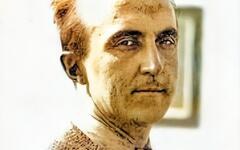
One of the most colorful characters at the Indianapolis Motor Speedway was “Umbrella” Mike Boyle. Boyle was the powerful force behind Chicago’s International Brotherhood of Electrical Workers. He also started Boyle Valve Company, a supplier of auto parts.
Before his first Indianapolis 500, Boyle was already the powerful leader of the Chicago International Brotherhood of Electrical Workers (IBEW). He became the business manager of the IBEW in 1909. On July 12, 1921, he called the Chicago electricians off the job from nightfall until midnight. The strike was called off after he was threatened by city officials with prosecutions for murder and manslaughter if there was any loss of life. He also spent four months in prison in 1920 for antitrust violations. He had been sentenced to a year, but his sentence was commuted by President Warren Wilson. He again ran into legal trouble and spent 50 days in jail for contempt of court on jury-fixing charges in the fraud trial of Illinois Governor Len Small. Small commuted his six-month sentence.
He earned the nickname of “Umbrella Mike” because he had an umbrella which he hung upside down at a local bar. According to the legend, people seeking favor with Boyle would make “donations” in the umbrella.
He first appeared at the Indianapolis 500 in 1926 when his Boyle Valve Special, driven by Cliff Woodbury, started from the 14th position and finished third in a rain shortened race. Over the next sixteen years, he won the Indianapolis 500 three times, finished in the top six thirteen times, and captured the pole four times.
The next several years were disappointing. In 1927, Boyle Valve entered three cars. Cliff Woodbury started from sixth but suffered a supercharger failure on lap 109 for a nineteenth place finish. The second car, driven by Ralph Hepburn finished 24th after a fuel leak finished his run after 39 laps. Jack Petticord finished 32nd after a supercharger failed on lap 23. The next year, his car driven by Fred Comer started from the 9th position and finished 9th. He was way off the pace. The winner, George Souders had an average speed of 98.034 mph while Comer’s car averaged 88.889 mph. A second car driven by Dave Evans finished 12th and a car driven by Cliff Woodbury finished 23rd after the timing gear failed on the 55th lap. In 1929, the Boyle Valve Special started from the seventh position and finished eighth. In 1931, he hired Lou Moore to drive the Boyle Valve Special. The car started from the 38th position after a differential failed on lap 104.
Harry “Cotton” Henning was one of the major mechanics in the 1920 and 1930s. He was the chief mechanic behind Peter de Paolo’s car which won the Indianapolis 500 in 1925. He continued to work on cars either driven by or owned by de Paolo for several years. By 1931, he had his own race team, the car being driven by Babe Stapp. In 1932, Mike Boyle hired Henning as his chief mechanic. One of Cotton Hemming’s keys to success was that after every practice run, he would tear a car down and check the vital parts.
Boyle also started a state of the art race shop on Vermont Street in Indianapolis where Henning could maintain the cars. While race teams have dedicated facilities for their race cars today, that was very unusual in the 1930s.
Lou Moore returned as the driver in 1932 with Cotton Henning as the chief mechanic and the car took the pole. The day was disappointing as the timing gear failed on the 80th lap for a 25th place finish. A second Boyle Valve car, driven by Wesley Crawford, finished 36th after a crankshaft broke on the 29th lap.
In 1933, Boyle entered three cars. The Boyle Products Special, driven by Babe Stapp, started from the 29th position. Stapp’s day of racing ended when he ran out of fuel on lap 157. Stapp led for 60 laps. A second car, the Boyle Valve Special, driven by Wesley Crawford, started from the 26th position and ended 24th after being involved in an accident on the 148th lap. The third car was driven by Bill Cummings. It started from the pole and finished 25th after a radiator failure on lap 137.
Boyle had another nickname at the Speedway instead of “Umbrella Mike.” He was referred to as “Pole Car Mike.” After the 1933 race, he decided he wanted a winner and spent “a king’s ransom” on new racing cars. This move paid off when in 1934 “Wild Bill” Cummings, driving the Boyle Products Special, won the Indianapolis 500. Having started from the tenth position, after 100 miles, he was in fourth. By 250 miles, he was in third and at 300 miles, he was in second. By the 350-mile mark, he had passed Mauri Rose. The two battled for the lead with Cummings losing it and then regaining it. In the process, he set a new speed record for the track of 104.865 mph. He crossed the yard of bricks 27 seconds before Mauri Rose, piloting the Duray Special. Leon Duray, owner of Rose’s car, filed an unsuccessful official protest claiming that Cummings violated the rules and gained about three-quarters of a lap when the yellow flag was out. Cummings received a $20,000 prize for winning. Cummings won the race in the same car that Babe Stapp drove in 1933.
In 1935, Boyle entered a three-car team. Bill Cummings returned for the race in 1935. He started fifth and finished fourth. A second car, driven by Al Miller, finished 15th after engine failure on the 179th lap. The third car, driven by Russ Snowberger, finished 27th after exiting the race on lap 60.
The top Boyle Products car in 1936 was driven by Chet Miller who took third place and Zeke Meyer finished ninth. Bill Cummings' car wouldn't start.
In 1937, the top Boyle Products car was driven by Louis Meyer to fourth place. Bill Cummings, who started from the pole, finished sixth, while Chet Miller finished 30th after his ignition failed on lap 37.
Chet Miller finished third in 1938 in the I.B.E.W. car. A second I.B.E.W. entry, driven by Mauri Rose finished 13th, while Bill Cummings finished 24th. Cummings' car had a radiator leak on the 23rd lap. Returning to the race when other cars were on the 26th lap, the car’s radiator leak returned on lap 72 ending his day of racing.
Boyle’s second Indianapolis 500 victory was in 1939. Boyle hired Wilbur Shaw, the winner of the 1938 Indianapolis 500, after Boyle agreed to import a Maserati. Shaw started from the third position. He dropped to sixth after a long pit stop but regained third at 250 miles. By the 300 mile mark, he was in second place where he remained through 450 miles. He then turned on the afterburners and finished the race nearly two minutes before the second-place finisher Jimmy Snyder. Ted Horn, driving the car Cummings drove in 1938, finished fourth while Chet Miller finished 21st after being in an accident on the 110th lap. Miller deliberately crashed his car to save Bob Swanson who was thrown from his racer. Miller spent eight weeks in the hospital recovering from his injuries.
In 1940, Wilbur Shaw became the second driver to win back-to-back Indianapolis 500s in the Boyle Racing Headquarters car. Driving the same Maserati as in 1939, Shaw was the only driver to complete all two hundred laps. Drizzle had started on mile 375 and the stewards called the race believing the track was too dangerous. At the time the race was called, Shaw was about 2.15 miles ahead of Rex Mays. Teammate Ted Horn finished fourth and Frank Wearne finished seventh.
In 1941, Wilbur Shaw was going for his third consecutive win but a fire in the garages before the start of the race resulted in a tire, which was marked as having been previously used, failed on the 152nd lap. Shaw finished 18th. His car hit the outside barrier. At the time, Shaw was a lap ahead of his nearest competitor. His teammate, Chet Miller finished sixth and George Connor finished 16th after his transmission failed on the 168th lap.
Boyle returned to the Indianapolis Motor Speedway with one entry in 1946. The Maserati in which Wilbur Shaw had won the race in 1939 and 1940 finished third. It was driven by Ted Horn.
If you know of someone who would enjoy this article, please forward it to them. If someone sent this to you and you would like to be added to my subscriber list, please let me know at sigurwhitakerbooks881@gmail.com.